 German ocean box liner Hapag-Lloyd saw a bigger net loss in the first quarter of this year compared to the same period a year ago, attributing the decline to high bunker prices and low freight rates.
The group registered a net loss of EUR62.1 million (US$67.5 million) for the period January-March, a deeper decline from a loss of EUR42.8 million in the same quarter of 2016.
The first-quarter result was affected by ongoing bunker price increases, the company said in an emailed release May 12. At $313 per tonne, the average bunker price was clearly above the previous year’s figure of $197 and “is the highest level seen since June 2015,” it said.
But the company said the first three months of the current financial year posted a positive operating result despite the higher fuel costs.
Revenue went up by 10.4% to EUR2.13 billion from the prior-year period, boosted by exchange rate effects and a volume increase of 6.8% year-on-year to more than 1.9 million TEUs.
EBITDA also improved, up by 6.4% to EUR131.3 million, while EBIT remained relatively unchanged year-on-year at EUR3.5 million from the prior-year period’s EUR4.8 million.
Hapag-Lloyd said that while the average freight rate was $20 lower than in the same quarter of the previous year, there were “further signs of a slight upward curve compared with the past quarters.”
It added that it was able to hike rates in a number of trades “even though the industry environment remains challenging,” but noted that “these rate increases are only going to have an impact on the company’s result later in the year.”
For the period covered, the liner focused on preparations for the merger with UASC and the launch of its new alliance.
“The launch of the THE Alliance went well, and the merger with UASC will be closed shortly,” said Rolf Habben Jansen, CEO of Hapag-Lloyd AG. “After the closing our priority will be to integrate UASC into Hapag-Lloyd quickly and to realize initial synergies from the merger.”
Overall, the merger with the Arabian liner shipping company is expected to generate annual savings of $435 million from 2019 onwards, with a large proportion of this already to be achieved in 2018.
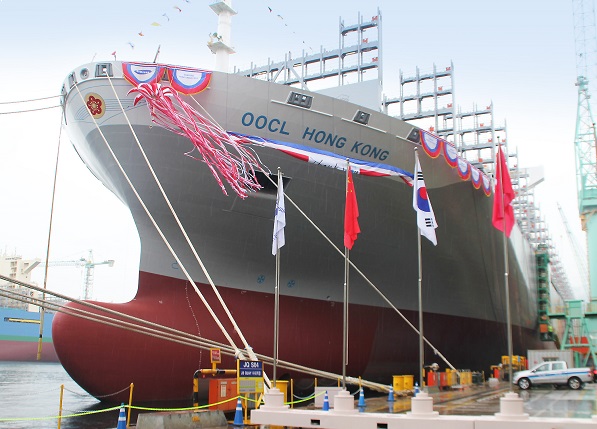
Photo: Hummelhummel