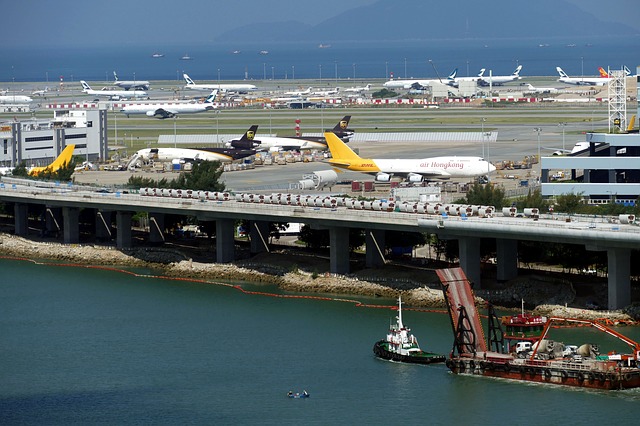

 Hong Kong International Airport (HKIA) saw cargo throughput fall at a double-digit rate in February, attributing the decline to “unfavourable macroeconomic conditions.” Growth in passenger throughput continued during the month, meanwhile.
In a release, HKIA said cargo throughput decreased by 14.4% to 274,000 tonnes in February year-on-year, with unloaded cargo contracting by 8.9% to 112,000 tonnes and loaded cargo declining 17.9% to 162,000 tonnes
Passenger traffic continued to grow last month, as HKIA handled 5.89 million passengers, marking a year-on-year increase of 1.1%.
Over the first two months of the year, HKIA handled 676,000 tonnes of cargo for an 8.6% decrease compared to the same period in 2018. The airport handled 12.4 million passengers in January and February, representing a year-on-year increase of 3.6%.
Combining the figures of January and February for comparison would cancel the effect of Chinese New Year holidays, said HKIA.
“Amid global economic uncertainty, cargo traffic saw 10% drops in both imports and exports in these two months, which are consistent with the softening cargo market in the region,” said the release.
Amongst key trading regions, cargo traffic to and from Europe and Southeast Asia experienced the most significant decreases.
Passenger volume during January and February 2019 was mainly driven by a 7% year-on-year growth in transfer/transit traffic. Japan and Southeast Asia recorded the most significant traffic increases over the first two months of the year.
On a 12-month rolling basis, cargo throughput at the airport saw a slight decrease of 0.9% to 5.06 million tonnes. HKIA handled 75.1 million passengers, representing a growth of 2.7% over the same period last year.
HKIA remained the world’s largest air cargo center in 2018 as ranked by Airports Council International, and placed eighth busiest airport in terms of passenger volume in the same year.
Photo: Image by falco