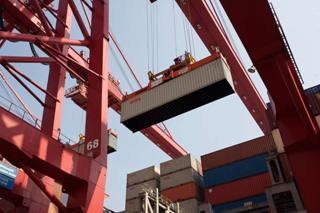
 The UN’s shipping body International Maritime Organization (IMO) has settled on a seven-step outline for an interim strategy to decarbonize the shipping industry, one of the biggest contributors to carbon emissions.
The outline was agreed on last week at the IMO meeting on ways to decarbonize shipping that was attended by 170 countries. The outline now needs to be developed into an interim plan due in 2018, reported Seas at Risk.
One proposal called for the shipping sector to adopt climate targets in line with the Paris Agreement and to decarbonize by the second half of the century. The suggestion gained overwhelming support but failed to reach a consensus.
China and India voiced strong support for alternative low carbon fuels, and a coalition of Pacific and European nations highlighted the urgency of taking in-sector action. A number of countries—among them Brazil and Chile—voiced concerns about potentially negative impacts of reduction measures.
Shipping accounts for 2% to 3% of global greenhouse gas emissions, but a 2014 UN study predicts growth in trade could swell its carbon footprint by 50% to 250% by 2050, blowing chances of limiting global warming to well below 2°C, as targeted in the Paris Agreement.
The seven-step plan will form the basis of the IMO’s first substantial attempt to tackle climate change, 20 years after first being requested to do so under the Kyoto Protocol. The body is aiming to deliver an interim climate deal for shipping in 2018, with a comprehensive plan scheduled for 2023.
The seven-stage outcome is as follows: emission scenarios, vision, ambition, candidate measures to achieve GHG cuts, R&D/capacity building, periodic reviews, and follow-ups ahead of the 2023 revised strategy.
When presented in early 2018, the interim plan is expected to lay out a clear vision, a suite of short and medium-term measures, and quantified CO2 targets for the sectors, said Seas at Risk, an umbrella organization of environmental NGOs in Europe.
John Maggs, senior policy advisor of Seas At Risk, said, “Some important progress has been made but if the process is to produce a fit for purpose initial strategy by 2018 then it needs to shift up a gear and start focussing on the core issue of how to cut ship emissions deeply in the short term.”
Moses Mose, Solomon Islands ambassador to EU, said: “We are encouraged that many countries share our interests and are willing to find common ground and a way forward on this issue. We must seize on this opportunity to produce tangible progress so that IMO has something credible to report to COP 24 in 2018.”
Bill Hemmings, director shipping and aviation, Transport & Environment, said: “Political differences over differentiation and potential costs of measures prevented substantive progress…. A sense of urgency was lacking and hopes have again been deferred to the next meeting being held in October nearly two years after the Paris agreement.”
Photo: Louis Vest