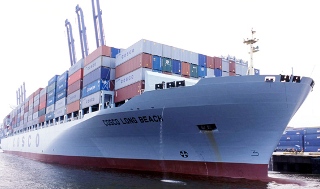
While near sourcing is increasing, at its present rate it is unlikely to affect deep-sea container volumes significantly in the near future, said a global research consultancy.
Drewry Maritime Research in its feature article titled “Near Sourcing—All Talk but Little Action” said reports over the past few years about the transfer of manufacturing from Asia to countries located closer to Western markets appear to be “hype over substance.”
Many shippers have said that the trend toward near sourcing is escalating for a number of reasons. Sourcing nearer to home—say, Mexico for the United States—will mean faster delivery than sourcing from Asia, a better option considering the faster trend cycles now confronting retailers.
It will also mean more savings, especially with the practice of slowing vessels on headhaul routes from Asia to save fuel. In addition it will help minimize carbon footprints and cut green taxes related to off-shoring.
Along these lines, there are goods, such as footwear, that are already seeing production transferred from Asia to closer U.S. production centers such as Mexico, and there are some products, such as computers, that are now even being manufactured in the U.S. itself.
But Drewry said near-sourcing assumptions need to be treated with care. “For example, although Mexico is reported to be one of the main beneficiaries of retailers’ needing to service US customers more quickly, the country’s growth in exports of containerisable cargo to the US has only been marginally faster than that of China and the rest of Asia over the last few years,” it pointed out.
Much is also reported about near sourcing in Europe, although the evidence so far suggests more hype than substance, Drewry said. “Turkey, like Mexico for the US market, is claimed to be one of the main beneficiaries, yet its trade to the UK, Europe’s largest importer, is tracking behind the trend line from Asia.”
Drewry said evidence shows that while near sourcing will increase, it is coming off a very low base, so that its impact on deep-sea ocean carriers is unlikely to be significant in the short term. “These are desperate times for consumers, so cheap prices from Asia are more important than before.”
The UK-based consultancy added that predicting whether near sourcing will take off in the longer term is “dangerous.”
There are other developments that need to be looked into. “Another more immediate trend than near sourcing will be the transfer of production away from China to cheaper Asian countries,” it added.
Another one is the uncertain growth rate of Internet shopping, which will soon demand same-day delivery.
Photo: ninahale