
 Philippine domestic trade grew at double-digit rates in both volume and value in full-year 2018, data from the Philippine Statistics Authority (PSA) showed.
Domestic trade in 2018 registered a total quantity of 25.78 million tons, up 10.2% from the 23.40 million tons posted in 2017.
Food and live animals topped the list with 6.39 million tons or 24.8% of all traded commodities, while animal and vegetable oils, fats and waxes had the least quantity with 0.08 million tons.
In value, domestic trade went up 12.3% to P859.67 billion from P765.38 billion in 2017.
Machinery and transport equipment posted the highest value with P276.06 billion. On the other hand, animal and vegetable oils, fats and waxes commodities registered the lowest value with P4.58 billion.
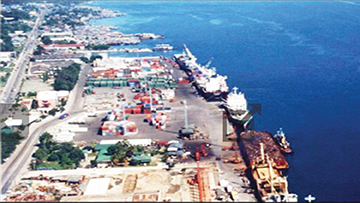
Water transport remained the main means of transporting domestic commodities with 99.9% of the total, while the remaining 0.1% was transported through air.
Machinery and transport equipment was still the largest contributor, recording a value of P276.06 billion or 32.1% of the total traded commodities. Food and live animals placed second with P208.36 billion or 24.2% share, and manufactured goods came third with P118.59 billion or 13.8% share.
Other top traded commodities in 2018 were mineral fuels, lubricants and related materials, P60.80 billion; chemical and related products, P58.26 billion; miscellaneous manufactured articles, P55.11 billion; beverages and tobacco, P43.47 billion; commodities and transactions, P18.54 billion; crude materials, inedible, except fuels, P15.88 billion; and animal and vegetable oils, fats and waxes, P4.58 billion.
Luzon posted the highest domestic trade value of P374.26 billion or 43.5% of the total trade value in 2018. It was followed by Mindanao with P271.78 billion. Visayas, on the other hand, had the lowest trade value with P213.62 billion.
Most traded commodities in Luzon group were food and live animals with total value of P96.71 billion or 25.8% of the total. This was followed by machinery and transport equipment and manufactured goods with P64.80 billion (17.3%) and P60.27 billion (16.1%), respectively.
The top three commodities that contributed the most to the total value of traded commodities in the Visayas were food and live animals (P65.34 billion or 30.6%); machinery and transport equipment (P49.67 billion or 23.3%); and manufactured goods (P29.96 billion or 14%).
In Mindanao, machinery and transport equipment were the highest domestic traded commodities with a value of P161.60 billion. This was followed by food and live animals and by manufactured goods with values of P46.31 billion and P28.37 billion, respectively.
Among the regions, the National Capital Region (NCR) exhibited the largest share of the total outflow value in 2018, posting an amount of P326.40 billion for a 38% share. Outflow is the total value of commodities which goes out of a specified region or province.
Eastern Visayas followed with transactions amounting to P110.02 billion, while Western Visayas with P105.35 billion and Central Visayas with P97.96 billion placed third and fourth, respectively.
Outflow values of other regions were as follows: Northern Mindanao, P63.60 billion; Central Luzon, P44.24 billion; Caraga, P36.26 billion; Davao Region, P29.06 billion; Zamboanga Peninsula, P14.16 billion; South Cotabato, Cotabato, Sultan Kudarat, Sarangani, General Santos (SOCCSKSARGEN), P13.38 billion; Bicol Region, P8.83 billion; Autonomous Region in Muslim Mindanao (ARMM), P6.77 billion; MIMAROPA (Mindoro, Marinduque, Romblon, Palawan) Region, P3.18 billion; and Calabarzon (Cavite, Laguna, Batangas, Rizal, Quezon), P435.26 million.
In terms of inflow value—or the total value of commodities coming into a specified region—Central Visayas recorded the highest inflow value amounting to P169.72 billion or 19.7% share to total inflow value of all traded commodities in 2018.
The Cordillera Administrative Region (CAR), on the other hand, had the lowest inflow value of P10,000 ]is this correct?[ in 2018. Inflow values of other regions were as follows: Western Visayas, P140.39 billion; Caraga, P132.72 billion; Northern Mindanao, P105.35 billion; NCR, P91.78 billion; Davao Region, P51.15 billion; Eastern Visayas, P45.62 billion; Zamboanga Peninsula, P43.30 billion; MIMAROPA Region, P24.20 billion; SOCCSKSARGEN, P20.57 billion; Calabarzon, P15.72 billion; Bicol Region, P9.28 billion; Central Luzon, P3.48 billion; Ilocos Region, P3.06 billion; ARMM, P2.94 billion; and Cagayan Valley, P0.38 billion.
Of the 17 regions, four regions yielded favorable trade balances. Among them, NCR recorded the highest trade balance of P234.62 billion. The other regions with favorable trade balances were Central Luzon, P40.76 billion; Eastern Visayas, P64.40 billion; and ARMM, P3.84 billion. Trade balance is the difference between outflow and inflow.
PSA noted that passenger traffic via coastwise transport dropped 42.4% to 22.99 million passengers in 2018 from 39.89 million passengers in 2017. Central Visayas recorded the highest number of passengers with 5.80 million. MIMAROPA Region and Western Visayas placed second and third, with 4 million and 3.84 million passengers, respectively.