 Filipino exporters are strongly encouraged to tap more into the huge Chinese market, the world’s second largest economy with a population of over a billion.
Henry Huang, chief executive officer of Business One Global Trade Center, said in a briefing that Chinese consumers prefer to buy imported products particularly something with quality, as more of them are now “status-conscious”.
He said Chinese buyers also have issues with safety, credibility and quality against their locally-made products.
Business opportunities abound particularly for manufacturers of metal products, furniture, fashion accessories, home decors, food (processed fruit and seafood), he noted.
Linyi, a province in Shandong that hosts the Center’s office, boasts of more than 100,000 wholesalers distributing to all provinces in regions in China. Huang noted their import sections are growing but lamented only relatively few Filipino exporters have made it to the Chinese market.
Of these, very popular is the 7D Mangoes brand which comes from Cebu.
To effectively tap the Chinese market, Huang advised Filipino exporters to establish good linkage with Chinese traders through participation in shows and conferences specifically designed for imported products such as the Business One GTC. The company also provides logistics services to help exporters track even the retail sale of their goods.
Otherwise, it will be difficult for Philippine exporters to enter the China market on their own because of the many business barriers, including language and red tape, Huang explained.
In his opening remarks during the briefing, Philippine Exporters Confederation, Inc president Sergio R. Ortiz-Luis Jr said China’s rise as an economic powerhouse is one of the key factors that helped propel the Philippine export sector. Philippine export revenues in 2010 soared to a better-than-expected 33.7% growth, with receipts hitting $51.39 billion — the first time since 2007 that annual revenues breached the $50-billion-mark.
It is during this period, he noted, that Philippine exports to China stood out compared with other country-importers, as it posted a 94.32% growth in export receipts to China in 2010.
With its economy valued at $5.8 trillion, China has already surpassed Japan as the world’s second largest economy behind the US.
The establishment of the China-ASEAN Free Trade Area in 2010 further expanded bilateral trade between the two, Ortiz-Luis added. According to China’s General Administration of Customs, China’s imports from ASEAN increased 44.8% to $154.56 billion last year. Bilateral trade rose 37.5% year-on-year to $292.78 billion.
Meanwhile, China remained the Philippines’ third largest trading partner and the fastest growing market for exports in 2011. According to the National Statistics Office, the country’s exports to China reached over $6.1 billion last year, representing a 12.70% share of total Philippine exports. Electronics accounted for the bulk of exports which amounted to $3.3 billion or 55.62% share of total exports to China.
It is projected that this year, the growth rate of Philippine exports to China will increase more than that to Japan and the US. Specifically, a recent study showed that Philippine exports to China country will increase by 7.54% this year, while exports to Japan and the US will grow by 5.77% and 5.38%, respectively.
Meanwhile, the World Bank has projected China’s economy growing at 8.2% in 2012 and 8.6% in 2013.
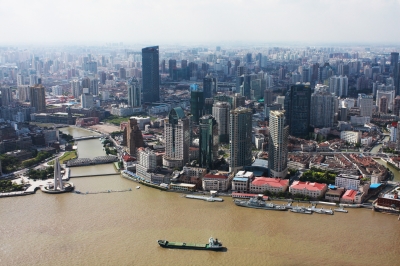
Photo of Shanghai by thepathtraveler
http://www.freedigitalphotos.net/images/view_photog.php?photogid=3078