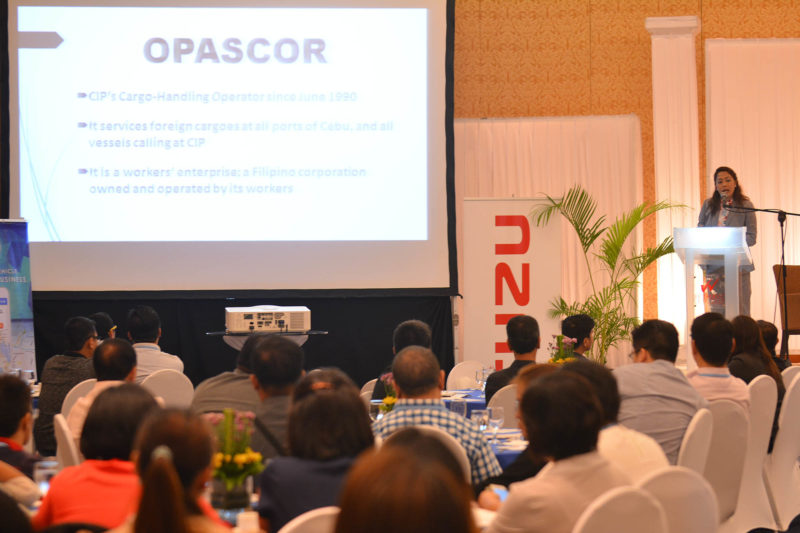
Ramon De Leon, chairman of Manila-based Pac-Atlantic Group, offered a private sector wish list for Subic Bay which, when addressed, would greatly bolster utilization of Subic port.
In his presentation at the recent Subic Bay Maritime Conference and Exhibit, De Leon said the increased use of Subic port will lower logistics costs (in terms of trucking and port charges) for importers and exporters north of Manila; increase efficiencies as a result of less traffic and faster truck turnaround; and decongest Manila roads and seaports which will lead to increased productivity, less pollution and fuel savings.
The situation will also bring about more opportunities for freight forwarders, brokers and truckers in Subic to establish offices and create local jobs.
But for all of these to come to fruition, De Leon said it is imperative for Central Luzon importers and exporters to articulate their needs to government, including their desire for more shipping lines to call Subic; commit to use Subic port for their inbound and outbound shipments provided there are economies of scale; and be on the continuous lookout for alternative ports to Manila.
On the other hand, he said vessel operators should also provide government with what they need; respond to the call of shippers by starting regular port calls in Subic; and not to remain content in shipping through Manila.
For now, only Wan Hai and APL maintain regular containerized operations in Subic. Tasman Orient has a service that comes every 20 days.
There have been meetings initiated by Subic Bay International Terminal Corp (SBITC), operator of Subic’s New Container Terminal 1 (NCT 1), and J-Pac Logistics, Inc, a member of the Pac-Atlantic Group, to lure Singapore-based feeder operator PACC into Subic.
J-Pac is the marketing partner of SBITC. The two companies have also promoted Subic port at the recent Breakbulk China 2012 conference and exhibit in Shanghai.
NCT 1 is currently underutilized, with less than 10% of its 300,000 twenty-equivalent unit annual capacity in use.
Another key to pushing the use of Subic port is ventilating industry concerns among logistics service providers, including freight forwarders, customs brokers, truckers, and equipment providers, De Leon said.
As for Subic port owner Subic Bay Metropolitan Authority and port operator SBITC, De Leon said they should offer more competitive rates than those offered in Manila and further streamline port processes. Their challenge also lies in exploring other ways to lure shipping lines to Subic, such as offering free storage of empty containers for vessels plying the Hong Kong-US West Coast route.
The longest private sector wish list detailed by De Leon concerns government. He said the private sector hopes government can provide accurate shipping data that could help build a case for shipping lines to call Subic.
Government should also subsidize port costs, as is the practice in many progressive maritime nations, at the same time streamline customs processes for Freeport locators to make Subic Bay a real Freeport zone. He noted current procedures limit capabilities of the Freeport zone to lure more locators, shippers and logistics service providers.
De Leon said government should also be more proactive in addressing port issues, consider passing a law to push optimum utilization of Subic port, and live up to its commitment to give power to organizations it created to promote Subic.