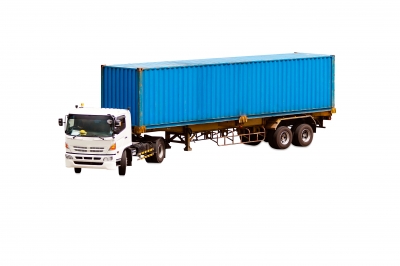

 Cargo trucks are among public utility vehicles (PUVs) in the Philippines that will be required by a proposed bill to install speed limiters in an attempt to control reckless driving that often leads to road accidents.
The Congressional Bicameral Conference Committee has adopted a bill mandating the installation of speed limiters on every PUV, including cargo trucks, closed vans, and tanker trucks. Speed limiters are designed to reduce accidents by limiting the maximum speed of a vehicle through restricting fuel supply to the engine.
On February 1, both the Senate and the Lower House approved the Road Speed Limiters Act of 2015, Senator Joseph Victor Ejercito, one of the bill’s proponents, said in a statement. He added that the Lower House version was adopted for wider coverage.
The Senate passed on third and final reading its version of the bill on January 18, while the Lower House approved its version in August last year.
The Senate version only includes public utility buses, but the Lower House version encompasses trucks, trailers, cement trucks, shuttles, and tanker trucks. Ejercito said they decided to include trucks because of the extent of damage these big vehicles could do when they overspeed and lose control.
The bill excludes taxicabs, tricycles, and jeepneys. After a year of implementation, the Department of Transportation and Communications (DOTC) can review whether these PUVs should also be fitted with speed limiters, Ejercito said.
For operators that fail to put in speed limiters on their vehicles, Congress has agreed on a P50,000 penalty and a possible suspension of their franchise until they comply with the requirement.
Under the bill, no PUV included in the list is to be allowed to run on any road, street or highway in the Philippines without a speed limiter that meets the standards and specifications approved by the DOTC.
On the prescribed speed limit, Ejercito said the bicameral panel left the decision on this matter to the DOTC and its attached agencies Land Transportation Franchising and Regulatory Board and Land Transportation Office; the Department of Science and Technology; and the Department of Trade and Industry. These departments will also be responsible for crafting the measure’s implementing rules and regulations.
Image courtesy of satit_srihin at FreeDigitalPhotos.net





