
 United Parcel Service (UPS) has lowered its expected earnings for the second quarter and revised downward its outlook for the whole of 2013.
In a media statement, the American package delivery service giant said it expects earnings per share for the second quarter to be US$1.13, down from earlier estimates of around $1.20 per share.
“Overcapacity in the global air freight market, increasing customer preference for lower-yielding shipping solutions, and a slowing U.S. industrial economy drove revenue and operating profit below expectations,” the statement said.
“In addition, UPS experienced some slowing in package volume growth as a result of labor negotiations,” it continued.
“We expect the second quarter market trends to persist and UPS is adapting to meet these conditions,” said Kurt Kuehn, UPS chief financial officer.
The Atlanta-based company is reducing its guidance for 2013 to a range of $4.65 to $4.85, a 3 percent to 7 percent increase over last year.
In May this year, UPS reaffirmed its 2013 guidance of $4.80 to $5.06, an increase of 6 to 12 percent over 2012 adjusted results.
The company will release its second quarter results on July 23, 2013.
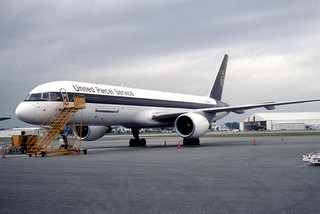
Photo: Aero Icarus