 With the strengthening in the global economy, the firm growth in advanced economies so far this year has now had a cascade effect on some emerging markets and developing economies (EMDEs), according to a new report by the Baltic and Maritime International Council (Bimco).
Bimco noted how the International Monetary Fund (IMF), expecting global GDP growth of 3.5% in 2017, has adjusted EMDE growth up by 0.1 to 4.6%.
The IMF has kept advanced economies’ growth at 2.0%, as lower expectations for the U.S. economy (down by -0.2 to 2.1%) are balanced by stronger performance in the Euro area (up by +0.2 to 1.9%) and Japan (up by +0.1 to 1.3%).
One of the global indicators pointing upwards is industrial production, which has increased for the four largest economic areas since January 2017.
“The indicator has continued to show strength throughout first half of 2017 and is a clear sign of positive development in the industries affecting global shipping the most. This is mirrored by a pick-up in global trade,” said Bimco.
The GDP growth rate forecasts for Europe and Japan have been upgraded in the most recent outlook by both the IMF and the World Bank, noted the report. It comes on the back of stronger domestic demand and higher export figures, coinciding with growing industrial production. In May 2017, the European Union (EU) experienced year-on-year industrial production growth of 4.1%, the highest growth rate in more than six years.
Japanese industrial production has rebounded from a bad and volatile period in 2014-2016, to achieve positive year-on-year growth eight months in a row, although it comes on the back of a weak 2016.
Similar to Japan, following two years of negative industrial production growth rates, positive rates have returned in the U.S. As oil prices have now stabilized, growth has returned, and industrial production now accounts for 19% of the U.S. GDP.
However, the GDP growth in other sectors of the U.S. economy has not shown the expected strength and together with the expectation of fiscal policy being less expansionary than anticipated, the IMF and World Bank have both revised downward their expectation for U.S. GDP growth in 2017.
Meanwhile, for China, GDP grew 6.9% year-on-year in both the first and second quarters of 2017 and remains on track for its first annual growth acceleration since 2010. As a result, the IMF has upgraded its projections for China by 0.1 percentage point for 2017 and 0.2 percentage points for 2018. The stronger growth in GDP was driven by increasing growth in exports and a robust increase in consumption.
Looking ahead, the Bimco report observes that despite global indicators for the four largest economies showing continued strength in the first half of 2017, global risk remains. “Escalating trade restrictions could easily derail the fragile recovery in trade and it is vital that policymakers don’t underestimate the importance of nurturing the recovery and fostering long-term growth,” it said.
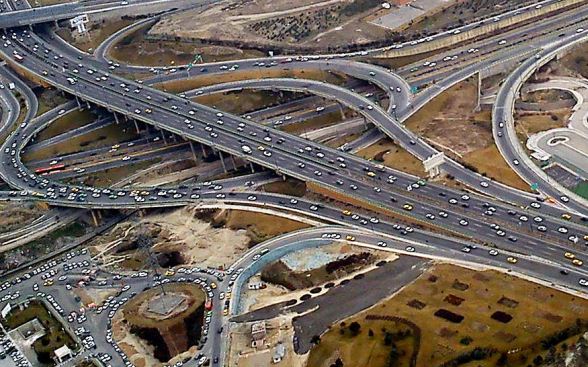
Photo: مانفی