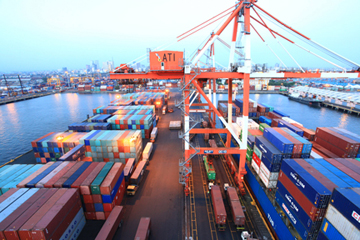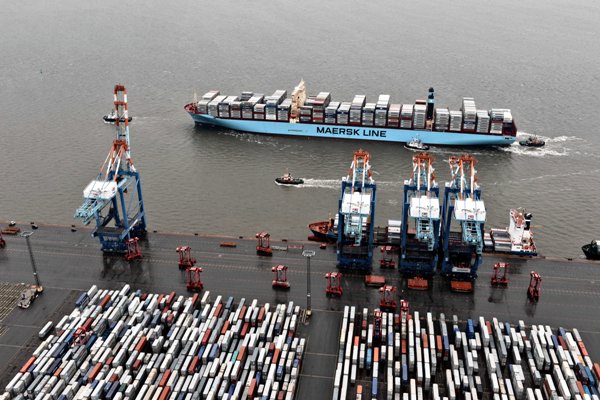
 The Sri Lanka Ports Authority (SLPA) has launched Vision 2020, an ambitious plan to make Sri Lanka a global logistic hub and an “important economic center of the world” by 2020 through massive logistics and shipping infrastructure developments.
Anticipating increasing global and regional trade demand, the SLPA said it intends to construct a multidimensional logistics system that will integrate logistics functions and to open a deepwater seaport with modern specialized terminals that can receive large vessels.
Vision 2020 with the theme “Logistics Excellence in the Silk Route” was unveiled in Colombo on July 30, 2013.
It will focus on improving the country’s ports and airports to connect South Asia to the rest of the world. “The geographic location gives a comparative advantage to the country to be the gateway to the Indian Subcontinent and to serve South and East Asia, Middle East and Africa on the main East-West shipping route,” the SLPA said.
Among the authority’s plans is to implement a “‘one touch’ information flow of all activities while sustaining the best practices at national and international level in order to improve overall economic conditions in Sri Lanka.”
It also envisions the establishment of a modern port “free of urban restrictions, thus assuring long-term expansion capacity and an industrial and logistics zone of worldwide extent logistics platform that can receive the main players of port, maritime, industrial, and logistic sectors.”
Under Vision 2020, SLPA is targeting to transform Sri Lanka into a “center for maritime excellence,” with the capacity to handle 20 million tonnage of cargo and obtain revenue of US$1 billion “to become the leading contributor to the national economy.”
To achieve these goals, the SLPA will develop infrastructure and facilities around Colombo, promote the Port of Colombo as a mega port, introduce sector-specific marketing and business development programs, and develop the Magam Ruhunupura Mahinda Rajapaksa Port as an international service, industrial, and container port.
It also aims to enhance safety and security for cargo and port users, restructure and redesign administrative procedures, implement advanced financial management systems, reduce carbon footprint, and develop other regional ports.
The government of Sri Lanka is supporting all this by laying out a development policy framework for transforming Sri Lanka into an “economically, socially, and environmentally sustainable country.”
The highlights of the policy framework include implementing major infrastructure projects, including electric facilities, ports, airports, water supply and irrigation facilities, and roads.
There will also be efforts to revitalize the agricultural and domestic enterprises, enhance public service, and promote the private sector and the SMEs.
“Moreover, the policy emphasizes on investments to be increased to 33-35 percent GDP and exports to be grown at twice the rate or more of real GDP,” the SLPA statement said.