To drive the concrete development of the Eastern Economic Corridor (EEC), Thailand’s Board of Investment (BOI) has recently approved an investment incentive scheme for the bidding winners of U-Tapao Airport’s Passenger Terminal 3 and Digital Park Thailand (EECd) development projects, two among six major development projects in the EEC.
With biddings for both projects planned for late 2018, BOI in a statement on October 30 said the incentive scheme is being offered to attract more investors to participate in the biddings.
When completed, the two projects will play a key role in moving the EEC forward as a new regional business hub and accelerate the government’s plan to transform the Thai economy, said BOI.
The winning bidder of U-Tapao Airport’s Terminal 3 development project will be granted exemption of import duty on machinery and an eight-year corporate income tax (CIT) exemption. If the developer has cooperation with an educational institution to develop human resources, BOI will grant a 50% reduction of CIT for another three years under the EEC investment incentive scheme.
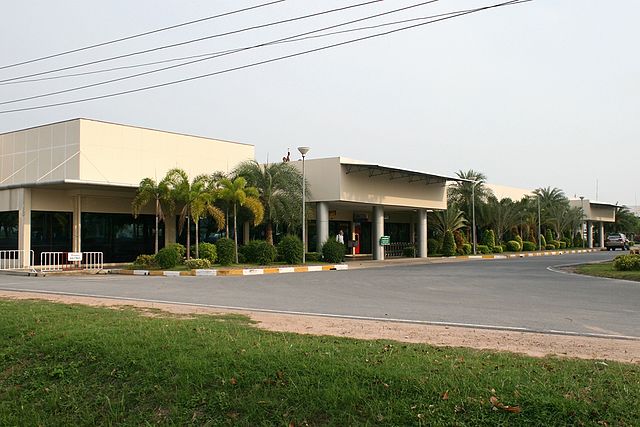
The U-Tapao Airport’s Terminal 3 is part of the country’s aerotropolis development project. Under a public-private partnership format, the aerotropolis will include the construction of a US$7.1 billion Passenger Terminal 3 which will increase the airport’s passenger handling capacity from 5 million passengers to 22 million passengers in 2033, and increase flight handling capacity from currently 25,000 units per year to 120,000 aircraft per year by 2033.
When completed, the aerotropolis project will cover additional passenger terminals, a cargo zone, a cargo & logistics village, a commercial gateway, a maintenance, repair, and overhaul (MRO) zone, and an aviation training center.
While the aerotropolis is being developed, the government is working on other infrastructure developments to build a seamless road, rail, sea, and air transportation network.
Such infrastructure development includes the construction of the $6.8 billion high-speed train linking the three airports of Don Mueang Airport, Suvarnabhumi Airport, and U-Tapao Airport; the $4.7-billion development of Laem Chabang Port Phase 3 which will increase container throughput from 7.7 million TEUs per year to 18.1 million TEUs per year; and the $306-million Map Ta Phut Port Phase 3 which be able to handle 19 million additional tons of cargo (petrochemicals and natural gas) upon completion.
The development of U-Tapao Airport, high-speed train, Laem Chabang Port, Map Ta Phut Industrial Port, and MRO center is included in the public-private-participation (PPP) fast-track program which shortens the bidding process from 40 months to eight to 10 months, said BOI.
For the winning bidder of the Digital Park Thailand or EECd, meanwhile, BOI will also grant import duty exemption on machinery and CIT exemption for eight years. The investment project including cooperation with the educational institution to develop human resources will enjoy an additional four-year tax holiday.
EECd is designed to become the center for digital industry and investment of the region, and promote commercialized digital innovations that will drive Thailand’s 4.0 transformation. It will also contribute to making Thailand the trade and investment hub for the region’s digital business. Targeted activities for EECd include software development, digital services, digital park, data center, innovation incubation center, cloud service, R&D, and relevant services.
The Digital Park Thailand will have a comprehensive digital infrastructure, including high-speed optic fiber network, innovation infrastructure such as living lab, and other facilities to support business activities, said the board. Built to be a smart city, the EECd will be fully equipped with advanced digital systems, such as face recognition security system, a smart tap water system, and a 5G testing area, among others.