 The World Trade Organization’s Trade Facilitation Agreement (WTO TFA) just needs two more ratifications before it enters into force, according to the World Customs Organization (WCO).
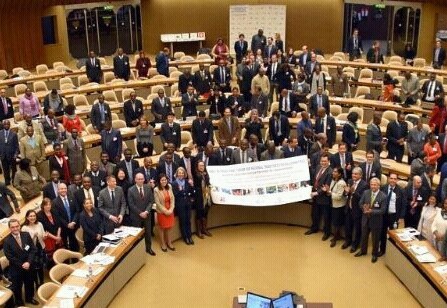
On the eve of the coming into force of the TFA, the first International Forum for National Trade Facilitation Committees was held from January 23 to January 27, 2017 at the United Nations, in Geneva, Switzerland, co-organized by the WCO, WTO, UNCTAD, International Trade Centre, World Bank, and other supporting organizations.
The forum was organized to discuss the road ahead for the National Committees on Trade Facilitation (NCTF) and its task to coordinate and facilitate the implementation of the TFA after it enters into force, said WCO in a written statement.
The WTO TFA must be ratified by at least 110 member countries before it enters into force. To date, it has recorded 108 ratifications.
The forum brought together over 300 participants from the private sector, customs administrations, ministries of trade, regional organizations, and international organizations.
Senior officials spoke of the importance of simplifying, harmonizing, and standardizing border procedures to hasten the clearance and movement of goods and people as a key contributor to trade-led economic and social development.
Ana Hinojosa, director of compliance and facilitation directorate of the WCO, reiterated the importance of effective coordination and cooperation among border agencies in implementing the TFA.
The one-week event had discussions on various trade facilitation topics such as technical assistance and support for trade facilitation reforms, the role of regional and international organizations in TFA implementation, the coordination among these organizations, engaging the private sector and all border agencies in the work of the NCTF, and the specific role of NCTF in evaluating and monitoring trade facilitation reforms.
The forum provided a venue for presenting and discussing the WCO’s Trade Implementation Guidance and the key instruments and tools for trade facilitation, such as the SAFE Framework of Standards, the Coordinated Border Management Compendium, the WCO Data Model, the Single Window Compendium, the NCTF Guidance, and the Time Release Study.
It also provided a platform for presenting the Mercator Programme through which the WCO supports customs administrations and other border agencies in effectively carrying out the TFA.