

The Maritime Industry Authority (Marina) advised Philippine-flagged shipping lines engaged in overseas operations to comply with the Ballast Water Management (BWM) Convention of 2004, which enters into force on September 8 this year.
Adopted in 2004, the BWM Convention—or International Convention for the Control and Management of Ships’ Ballast Water and Sediments—aims to prevent the spread of harmful aquatic organisms from one region to another by establishing standards and procedures to manage and control ships’ ballast water and sediments.
The Philippines is currently not a state party to the BWM Convention but is working to ratify the Convention, according to Marina Advisory (MA) No. 2017-14.
But all ships under the Philippine flag must comply with the provisions of the BWM Convention when calling at ports or terminals of states that are party to the agreement, MA 2017-14 said.
In the meantime, Philippine-registered ships covered under the convention are advised to secure from their recognized organizations a document of compliance or statement of compliance to the convention.
The BWM Convention applies to all ships that carry ballast water and are entitled to fly the flag of a party or that operate under the authority of a party to the convention.
It requires all covered ships to have the following: a ballast water management plan on board; a ballast water record book; compliance with the ballast discharge standards (ballast water exchange standard or ballast water performance standard); and an International Ballast Water Management Certificate once a survey conducted in accordance with Regulation E is completed.
According to the Marina advisory, the delay in ratifying the Convention prompted the International Maritime Organization (IMO) to issue Resolution A. 1088 (28) which recommends that flag administrations apply Regulation 0-2 standards at the first renewal survey associated with the International Oil Pollution Prevention Certificate (IOPPC) after the entry into force of the convention and upon delivery, for ships with a keel-laying date on or after September 8, 2017.
“It is the position of this Administration that compliance to Reg. D-2 discharge standards by installation of approved ballast water management systems should be as early as possible in order to reduce the impact of invasive aquatic species brought about by shipping operations,” MA 2017-14 said.
The advisory noted, however, that no current regulations bar a de-harmonization of the IOPPC to the Harmonized System of Survey and Certification (HSSC) so as to accommodate a later installation of ballast water management systems for up to five years or before September 8, 2022.
“The de-harmonization of the IOPPC shall be upon the decision of ship owners or ship managers,” the advisory said.
It noted that the maritime authority advises that de-harmonization may lead to the ship going for extra docking and being out of service during installation.
MA 2017-14 added that the IMO Marine Environment Protection Committee (MEPC) 71 will revisit this month discussions on the proposed alternate amendments to Regulation B-3 of the Convention, among them the document (MEPC 70IWP.12) which, if approved, will affect implementation dates for existing ships.
The ships will be affected in the following manner: apply on the first renewal survey following the date of entry into force of the convention, if the survey is completed on or after September 8, 2019; apply on the second renewal survey following the date of entry into force of the convention, if the first renewal survey is completed prior to September 8, 2019.
MA 2017-14 pointed out that de-harmonized ships will have no benefits under the proposed amendments if these changes are approved.
As for ships calling U.S. ports, the advisory observed that more stringent requirements on ballast water management are required, and that de-harmonization may not be an option.
Any questions regarding the convention should be addressed to the Marina administrator or the Overseas Shipping Service office, the agency said. – Roumina Pablo
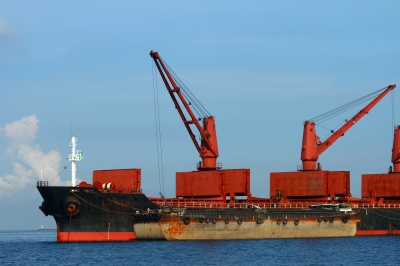
Image courtesy of kongsky at FreeDigitalPhotos.net