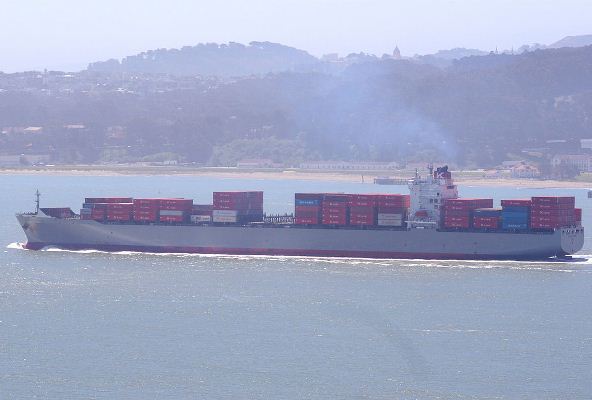
 Pacific International Lines (PIL), Singapore’s national carrier and leading containership operator, is collaborating with IBM Singapore in a blockchain trial to design and create an electronic bill of lading (e-BL) in order to improve the documentation process in supply chain management.
A bill of lading is a crucial piece of documentation in facilitating international trade as it contains legal and commercial information including evidence of contract of carriage, receipt of goods, and title of the goods.
Traditionally, a bill of lading is a physical document which banks rely on to provide trade financing. It is usually mailed to various parties, leaving it open to fraud, loss of the original document, and document handling costs, resulting in much inefficiency across the supply chain, PIL said in a statement.
To improve the process, PIL and IBM have proposed using an e-BL to streamline and replicate the paper trail online on a blockchain ledger created by IBM.
The e-BL will do away with the hard copy paper trail, cut unnecessary handling costs, and reduce the possibility of fraud.
Lisa Teo, executive director of PIL, said: “Working with a complex logistic network comprising ports and terminals, agencies, government entities, banks and shippers; systematic supply chain management is increasingly important to lower costs through the chain by cutting unnecessary expense, movements and handling.”
She observed how traditional information flow is predominantly handled via manual processes, and how the supply chain is slowed down when there are many points of communication within its framework.
“The use of blockchain technology to allow for the direct exchange of documents and information via the decentralized network to boost transparency, eliminate disputes forgeries and unnecessary risks will be key for this industry to progress,” she added.
The carrier plans to extend the e-BL to shadow an end-to-end shipment in real time. The creation of the e-BL will be in line with PIL’s ultimate goal of creating an intermodal transport logistics ecosystem which incorporates the use of blockchain, said Teo.
The PIL-IBM collaboration is supported by the Maritime and Port Authority of Singapore, Singapore Shipping Association, Infocomm Media Development Authority, Singapore Customs, and Bank of China Limited Singapore Branch, PIL said.
The box liner company is the world’s ninth top containership operator and one of the largest ship owners in Southeast Asia. PIL owns and operates a fleet of around 180 container and multipurpose vessels, serving over 500 locations in 100 countries worldwide.
Photo: lotsemann – Kota Layar