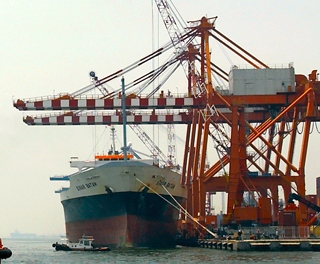

 World leaders at the annual Asia-Pacific Economic Cooperation (APEC) summit on November 12-13, 2011 vowed to push through with a Pacific Rim free trade zone, saying that with greater free trade in the region, it can become the center of global growth and economic recovery.
The original members of the Trans-Pacific Partnership (TPP) are Chile, New Zealand, Brunei, and Singapore, but the U.S. Australia, Malaysia, Vietnam, and Peru have expressed an intention to join.
Industry watchers say the U.S.-backed TPP can be the building block for a free trade area that will eventually cover all of Asia-Pacific, the world’s fastest growing region which now accounts for half of the world’s commerce and two-fifths of its trade.
“The Asia Pacific region is absolutely critical to America’s economic growth. We consider it a top priority. And we consider it a top priority because we’re not going to be able to put our folks back to work and grow our economy and expand opportunity unless the Asia Pacific region is also successful,” U.S. President Barack Obama told fellow leaders during the summit.
It is a “time of uncertainty” for the global economy, the summit participants said, where growth and job creation are dampened not just by the euro zone crisis, but also by natural calamities such as catastrophic earthquakes and tsunamis.
“These challenges have only strengthened our commitment to cooperation as the way forward,” the leaders said. “We recognize that further trade liberalization is essential to achieving a sustainable global recovery in the aftermath of the global recession of 2008-2009.”
But because APEC can only arrive at decisions by consensus, groundbreaking changes are said to be unlikely in the near future. The Pacific free trade zone is expected to face resistance from APEC member and economic powerhouse China, which has been lukewarm to any further liberalization of markets.
Some Asian leaders may also not be too keen to fast-track expansion to keep inflation in check, analysts said.
The euro zone’s financial problems are likewise regarded as a blot on the horizon for the developing Asia-Pacific, amid concerns that Europe’s unresolved debt crisis may spill over into the region.
Photo by mikecogh