By eliminating most of the import duties, the Trans-Pacific Partnership (TPP) agreement will provide Malaysia access to four trading partners with which the country has no free trade agreement (FTA)—the US, Canada, Mexico, and Peru—according to the head of the Ministry of International Trade and Industry (MITI).
“In some cases, the duties will be abolished with the implementation of the TPP the earliest by 2018,” Minister Mustapa Mohamed said, as reported by Bernama.
“For example, with the TPP, import duties for almost 73 per cent of textile products to the US will be eliminated immediately. Without the TPP, only 11 per cent of textile exports to the US enjoy zero tariff,” he said.
“We hope the TPP will spur investments in states which rely heavily on foreign investments such as Penang, Johor and Selangor,” he added.
Mustapa said the findings of the cost and benefit analysis on Malaysia’s participation in the TPP deal will be tabled in Parliament in three months’ time.
Overall, he said, the government is satisfied with the outcome of the TPP negotiations.
On the main challenges of the TPP, Mustapa said the text of the TPP agreement will be made available to the public soon.
“A few issues have yet to be settled. Although the discussions have been finalized, there are several technical issues outstanding, and we are still negotiating via e-mail,” he added.
The TPP is a landmark agreement that eliminates or reduces tariffs, lowers the cost of trade, and sets new and high standards for global trade while addressing next-generation issues. The TPP is envisioned to promote economic growth, create jobs, raise living standards, reduce poverty, promote good governance, and enhance labor and environmental protection among its member countries.
The 12 TPP members—Australia, Brunei, Canada, Chile, Japan, Malaysia, Mexico, New Zealand, Peru, Singapore, the United States, and Vietnam—announced the conclusion of their negotiations last October 5. Together, they are projected to have a combined population of 800 million, and to account for 40% of the world’s gross domestic product with US$27.5 trillion, representing 30% of world trade.
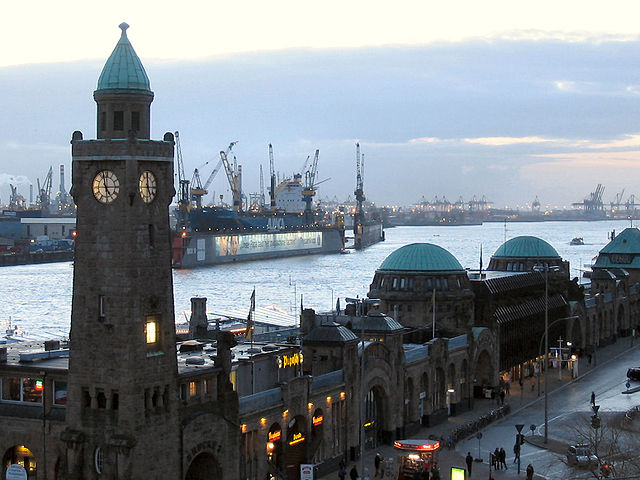
Photo: JaseMan